

Peptide
Retatrutide: The Future of Weight Loss and Metabolic Health
Apr
Retatrutide: The Future of Weight Loss and Metabolic Health
There’s a quiet shift happening in the world of weight loss—a shift that feels less like hype and more like science finally catching up with reality. For decades, people have chased diets, swallowed pills, and signed up for programs that promised transformation but delivered frustration. Now, a new name is stepping into the spotlight: retatrutide.
And if you’re paying attention, this one hits different.
What Is Retatrutide?
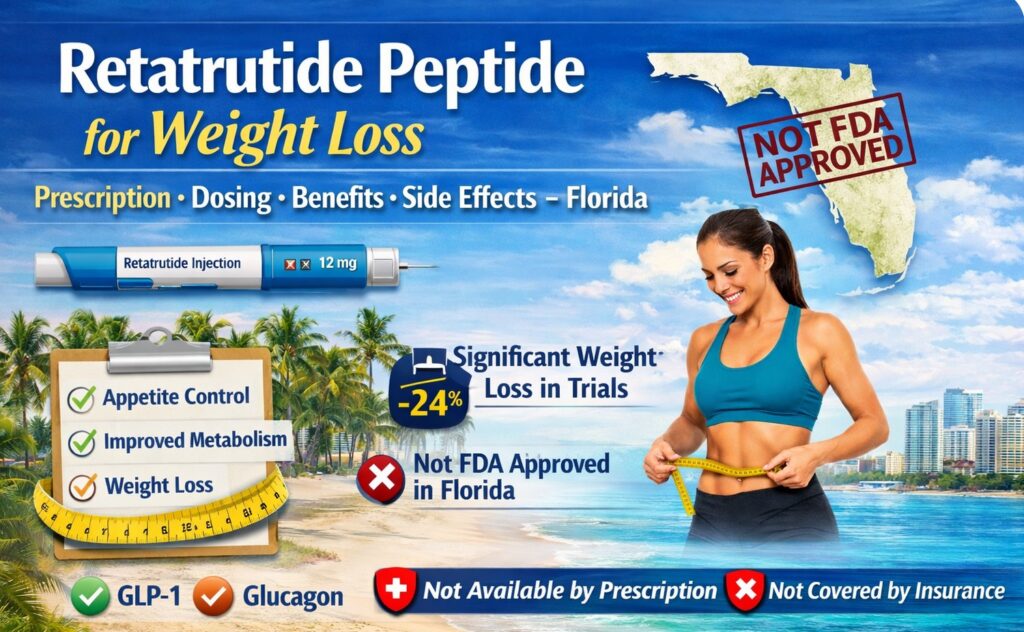
Retatrutide is an investigational medication designed to tackle obesity and metabolic disorders in a more advanced way than earlier treatments. Unlike traditional weight-loss drugs that focus on just one pathway, retatrutide works on three hormone receptors at once. That’s not just evolution—it’s strategy.
It targets:
- GLP-1 (glucagon-like peptide-1)
- GIP (glucose-dependent insulinotropic polypeptide)
- Glucagon receptors
Think of it like a three-headed engine instead of a single motor. Each pathway plays a role in controlling appetite, blood sugar, and energy balance. When they work together, the effect can be powerful—almost surgical in how it reshapes metabolism.
Why Everyone Is Talking About It
Let’s be real—weight loss has always been a battlefield. You eat less, move more, and somehow your body still fights back like it’s defending ancient territory. That’s because it is.
Your body is wired for survival, not aesthetics.
Retatrutide changes the game by working with your biology instead of against it. Early clinical trials have shown significant weight loss results—some participants losing over 20% of their body weight. That’s not just noticeable; that’s life-altering.
But it’s not just about dropping pounds.
This drug also shows promise in improving:
- Blood sugar control
- Insulin sensitivity
- Liver fat levels
- Cardiovascular risk factors
So it’s not just a “look good” solution—it’s a “live longer, live better” kind of move.
How It Works (Without the Confusing Science Talk)
Let’s strip it down.
Retatrutide helps:
- Reduce appetite → You feel full faster and stay full longer
- Increase energy usage → Your body burns more calories, even at rest
- Improve insulin response → Your blood sugar stays more stable
It’s like your body finally gets clear instructions instead of mixed signals.
And here’s the interesting part—because it activates glucagon receptors, it may boost fat burning more aggressively than older medications. That’s one reason it’s generating so much buzz.
The Results So Far
In clinical trials, participants didn’t just lose weight—they transformed.
Some key findings:
- Up to 24% body weight reduction in higher-dose groups
- Sustained results over time
- Improvements in metabolic health markers
Now pause for a second. That level of weight loss used to be almost exclusive to surgery. We’re talking about a shift from extreme interventions to pharmacological precision.
That’s not small.
The Catch (Because There’s Always One)
Before you start thinking this is magic in a syringe—hold on.
Retatrutide is still under investigation. It hasn’t received full approval for general use yet in many regions. That means:
- Long-term safety is still being studied
- Availability is limited
- Pricing is unknown for the broader market
And like similar medications, side effects can happen. Some users report:
- Nausea
- Vomiting
- Digestive discomfort
Nothing shocking, but still worth noting.
Because here’s the truth nobody likes to say out loud—there’s no shortcut without trade-offs.
Retatrutide vs Other Weight Loss Drugs
You’ve probably heard of other names floating around—some already popular, some trending hard on social media.
What makes retatrutide stand out is simple:
- It’s multi-targeted, not single-action
- It may produce greater weight loss outcomes
- It focuses on metabolic health as a whole, not just appetite suppression
It’s less about forcing your body to eat less and more about teaching it how to function better.
That’s a big difference.
Who Might Benefit Most?
This isn’t for someone trying to drop 5 kg for a vacation.
Retatrutide researchers are studying primarily for:
- People with obesity
- Individuals with type 2 diabetes
- Those struggling with metabolic syndrome
If you’ve been stuck in cycles—losing, gaining, repeating—this kind of treatment might offer a different path.
But it’s not a solo act.
Even with advanced medications, lifestyle still matters. Movement, nutrition, sleep—those old-school pillars haven’t gone anywhere. The difference now is you may finally have something backing you up instead of holding you back.
The Bigger Picture
Zoom out for a moment.
We’re entering an era where weight loss isn’t just about discipline—it’s about biochemistry, personalization, and precision medicine. Retatrutide is part of that wave.
And whether you’re skeptical or curious, you should be paying attention.
Because history shows us something: every time science makes a leap like this, it reshapes industries, habits, and expectations.
The same way smartphones changed communication…
This could change how we approach body weight and health forever.
Final Thoughts
Retatrutide isn’t just another trending name—it’s a signal.
A signal that the old ways of thinking about weight loss are fading. That maybe, just maybe, the struggle people have carried for years isn’t about lack of effort—but lack of the right tools.
Still, stay sharp. Don’t fall for hype without understanding reality.
Ask questions. Watch the data. Move with intention.
Because at the end of the day, no matter how advanced the medicine gets, the goal stays the same: a body that works with you, not against you.
And if retatrutide delivers on its promise, we might finally be stepping into that future.
